
Short bio
Paul Houston is Professor of Computational and Applied Mathematics at the University of Birmingham, UK. He completed his PhD in 1996 at the University of Oxford under the supervision of Professor Endre Suli, where he also spent a further 3 years as a postdoctoral researcher. He has since held academic positions at the University of Leicester and the University of Nottingham, before recently moving to Birmingham as Head of School of Mathematics in July 2026. His research focuses on the design, mathematical analysis, and implementation of high-order/hp-adaptive finite element methods, with recent emphasis on exploiting general polytopic meshes. In particular, he has considered the development of discontinuous Galerkin methods in a variety of application areas including fluid mechanics, electromagnetics, radiation transport, and computational bifurcation theory.
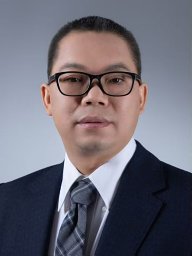
Jun Hu
Peking University, China
Short bio
Jun Hu is a Boya distinguished Professor at Peking University, and CSIAM Fellow. His main research interest is in finite element methods (FEMs) of partial differential equations (PDEs). His main works include the construction and theoretical analysis of optimal, easy-to-implement, and perfectly matched mixed FEMs for elasticity, the development of the structure-preserving FEMs for the linearized Einstein-Bianchi system, and the universal construction of conforming FEMs on simplicial grids for 2(r+1)-th order elliptic PDEs in any dimension, the numerical analysis of robust adaptive FEMs for thin structures within both the Reissner-Mindlin plate model and the Kirchhoff-Love plate model, and the analysis of lower bounds of eigenvalues by nonconforming FEMs for PDEs. He serves as former President of the Beijing Society of Computational Mathematics, managing editor of Advances in Applied Mathematics and Mechanics. He is the recipient of First prize of the Natural Science Award from the Ministry of Education, the Feng Kang Prize of Scientific Computing, National Science Fund for Distinguished Young Scholar of PR China, the first Youth Innovation prize of China Society for Computational Mathematics and the National Excellent Doctoral Dissertation of PR China, and a former Alexander von Humboldt Research Fellow of Alexander von Humboldt Foundation of Germany.

Lin Lin
California Institute of Technology, USA
Short bio
Lin Lin is the Judge Shirley Hufstedler Professor of Computing and Mathematical Sciences at the California Institute of Technology. He is also a Professor in the Department of Mathematics at the University of California, Berkeley, and a Senior Faculty Scientist at Lawrence Berkeley National Laboratory. His research focuses on developing classical and quantum computational methods for solving quantum many-body problems, with applications in quantum chemistry, quantum physics, materials science, and quantum information science.
Lin is a recipient of the Sloan Fellowship, the National Science Foundation CAREER Award, the Department of Energy Early Career Award, the SIAM Computational Science and Engineering Early Career Award (inaugural), the Presidential Early Career Award for Scientists and Engineers (PECASE), the ACM Gordon Bell Prize (Team), and the APS Outstanding Referee Award. He is a Simons Investigator in Mathematics, a SIAM Fellow, and an invited speaker at the 2026 International Congress of Mathematicians.

Sheehan Olver
Imperial College, UK
Short bio
Sheehan Olver works on using the theory of orthogonal polynomials to develop sparse spectral methods for partial differential equations and singular integral equations, and introduced the ultraspherical spectral method with Alex Townsend. He was also awarded the Adams Prize in 2012 for his work on the numerical solution of Riemann–Hilbert problems, which have application to modelling nonlinear waves and computing statistics of eigenvalues of random matrices. He has developed many open-source packages for structured linear algebra and spectral methods.

Lorenzo Pareschi
Heriot-Watt University, Edinburgh, UK & University of Ferrara, Italy
Short bio
Lorenzo Pareschi is Chair of Applied and Computational Mathematics at Heriot-Watt University, Edinburgh, and Professor of Numerical Analysis at the University of Ferrara. He received his Ph.D. in Mathematics from the University of Bologna and has held visiting professorships at the Georgia Institute of Technology, the University of Wisconsin–Madison, the University of Orléans, and the University of Toulouse. From 2009 to 2018, he served as Department Chair at the University of Ferrara. His distinctions include the Nelder Fellowship at Imperial College London, the John von Neumann Professorship at the Technical University of Munich, a Royal Society Wolfson Fellowship, and a FIS2 Advanced Grant. He serves on the Committee for Applications and Interdisciplinary Relations of the European Mathematical Society. He has served on the editorial boards of several international journals and, from 2026, is Editor-in-Chief of SIAM Multiscale Modeling and Simulation. His research focuses on numerical analysis, scientific computing, multiscale modelling, and kinetic equations. His work includes asymptotic-preserving and structure-preserving schemes, high-order IMEX methods, fast spectral methods, stochastic particle solvers and uncertainty quantification. He is the author of more than 200 publications and six books.

Ilaria Perugia
University of Wien, Austria
Short bio
Ilaria Perugia is Professor of Numerics of Partial Differential Equations at the University of Vienna, Austria. She earned her PhD in 1999 from the University of Milano, Italy, under the supervision of Franco Brezzi. Before moving to Vienna in 2013, she held successive faculty positions at the University of Pavia, and has held visiting appointments at the University of Minnesota and ETH Zürich. From 2016 to 2025, she served as Deputy Director of the Erwin Schrödinger International Institute for Mathematics and Physics (ESI) in Vienna.
She serves on the editorial boards of several leading journals in numerical analysis and scientific computing. Her research focuses on the design and mathematical analysis of advanced finite element methods for the numerical approximation of partial differential equations. Her work spans standard and non-standard finite element frameworks, including discontinuous Galerkin methods, virtual element methods, Trefftz methods, and space–time methods, with a recent emphasis on applications to wave propagation problems and nonlinear reaction–diffusion systems.

Sihong Shao
Peking University, China
Short bio
Sihong Shao is currently a full professor with tenure at Peking University. He received his B.S. in Information and Computing Science (2003) and Ph.D. in Computational Mathematics (2009), both from Peking University. He subsequently held a postdoctoral fellowship at the Hong Kong University of Science and Technology and visiting research scholar positions at the Universidad de Sevilla, the Chinese University of Hong Kong and Princeton University. He joined the School of Mathematical Sciences at Peking University as a faculty member in 2010. His research lies at the interdisciplinary intersection of scientific computing, quantum science, and intelligent algorithms, with a strong emphasis on foundational mathematical theory and the design of efficient algorithms. Particular attention is paid to the design, analysis, and application of discrete mathematical structures. His research interests include high-dimensional numerical methods, combinatorial optimization, computational quantum mechanics, mathematics and algorithms on graphs, numerical solutions of differential equations, and computational complexity theory. His recent work focuses on reliable adaptive numerical methods for kinetic equations in high-dimensional phase space including grid-based accurate deterministic methods and particle-based efficient stochastic methods, adaptive spectral methods in unbounded domains as well as equivalent spectral theory and related algorithms for graph cut problems.
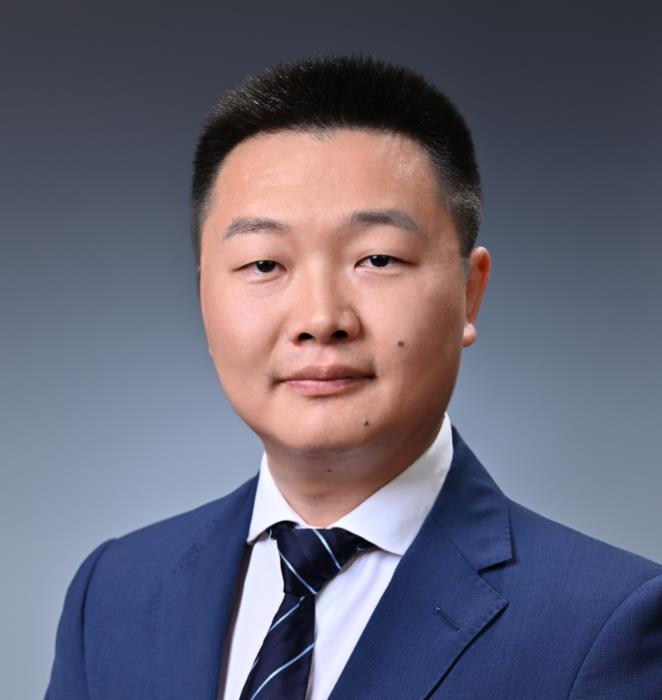
Zhiguo Yang
Shanghai Jiao Tong University, China
Short bio
Zhiguo Yang is an Associate Professor in the School of Mathematical Sciences at Shanghai Jiao Tong University. He received his Ph.D. in Mathematics from Nanyang Technological University in 2017 and was a Golomb Visiting Assistant Professor at Purdue University before joining Shanghai Jiao Tong University in 2020. His research lies in scientific computing and numerical analysis, with emphasis on structure-preserving spectral and spectral-element methods, fast solvers, and high-order numerical methods for highly oscillatory and multiscale partial differential equations. His work covers electromagnetic wave propagation, kinetic transport and electromagnetic–kinetic coupled systems, liquid-crystal models, and quasiperiodic moiré materials. A central theme of his research is the design and analysis of algorithms that preserve intrinsic mathematical and physical structures, including divergence constraints, conservation laws, asymptotic limits, energy stability, quasiperiodicity, and manifold geometry.